
Will you chip in to support our nonprofit newsroom with a donation today?
Yes, I want to support My MLTnews!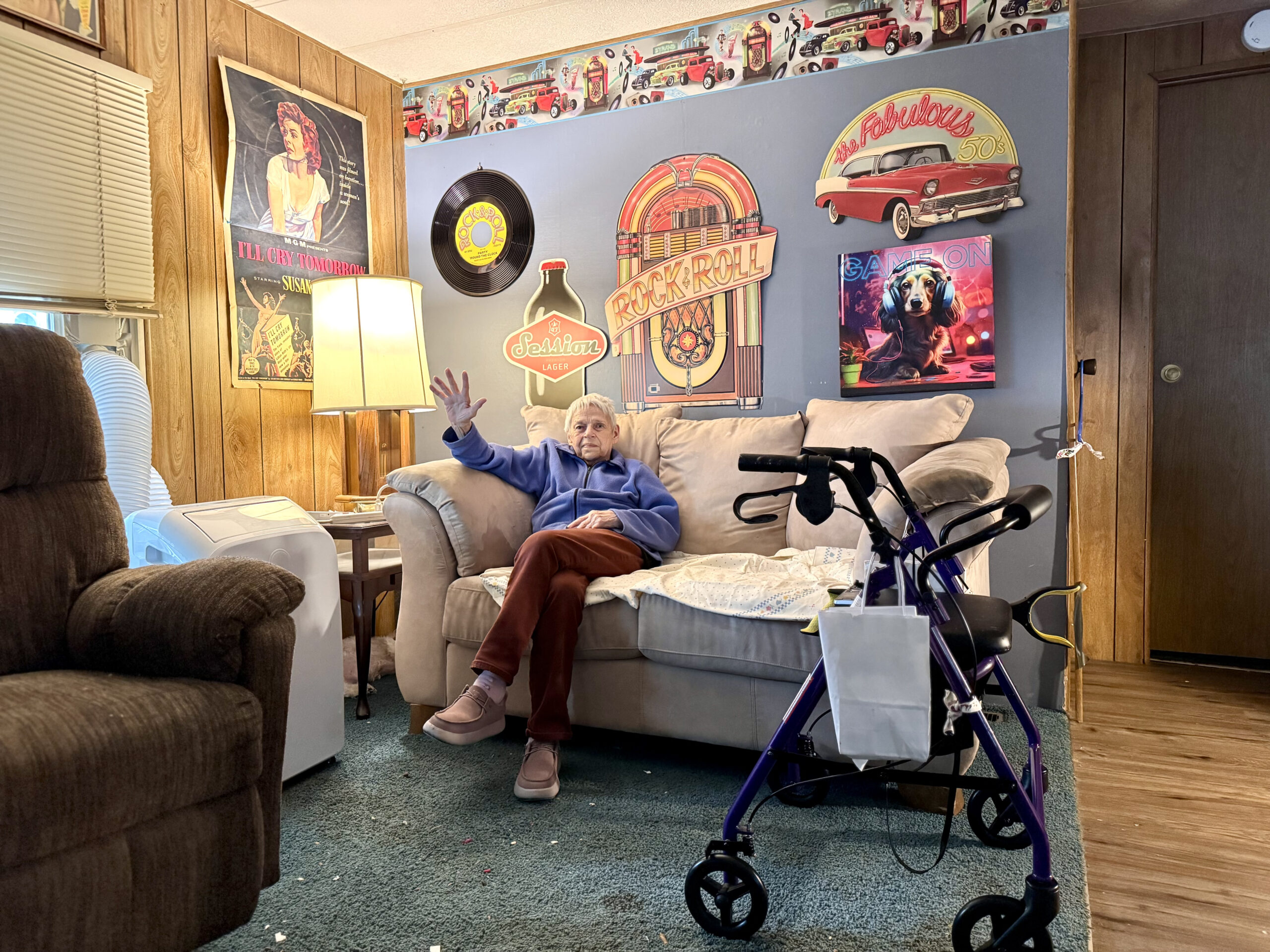
The new state law that puts a cap on rent increases has given tenants like Nancy DeWester some sense of relief.
DeWester lives at Martha Lake Mobile Manor, which is just outside the Lynnwood city limits. She moved in about 15 years ago, and her rent at the time was $425. Now she pays about $1,200 – not including sewer, water and other fees.
“The cost of living has gone up,” DeWester said. “I’m happy that it [the law] passed.”
Those who live in a manufactured home community own their place but rent the land their home sits on. Tenants who live in these communities are diverse, including seniors with fixed incomes and low-income families.
Carson Marshall, who owns a manufactured home in SeaTac, said having one’s own home adds a sense of stability to their financial situation.
For people like Marysville manufactured home owner Joan Bradford, it’s the last home they plan to own.
“This is it for us. We’re either going to die here or go to a nursing home,” Bradford said.
Engrossed House Bill 1217 limits rent increases to 7% plus inflation or 10% (whichever is less) per year under the Residential Landlord-Tenant Act, as well as 5% per year under the Manufactured/Mobile Home Landlord-Tenant Act. It went into effect May 7.
The Washington State Standard reported in August that the state attorney general fined eight landlords $2,000 each for violating the law. It affected over 250 tenants across the state.
Through the end of this year, the cap on rent increases is set at 10%, according to the state Department of Commerce’s website. For 2026, the cap is set at about 9.7%.
Marshall said the law provides tenants stability so they do not have to worry about whether they can continue living in their home the following year.
“It’s not like you can just suddenly go somewhere,” Marshall said. “If you want to move and go somewhere where you can afford, you are on a waiting list.”
As of Sept. 19, the waiting list for Housing Authority of Snohomish County’s Housing Choice (Section 8) Vouchers is full. The vouchers are for those who need help with rent at properties run by private landlords and are earning 50% or less than the county’s median income.
The waiting time for HASCO’s voucher program is three to five years. The waiting time for the organization’s housing assistance program specifically for seniors and/or those with disabilities is five to seven years.
“We really worry about some of the older people in those older homes receiving huge rental increases. We don’t know where they’re going to end up. Will they end up on the street?” Marshall said.
Jeanette Burton, who used to live in a manufactured home community in south Everett, said it’s important for manufactured home communities to have their own rent cap rate because those tenants own the place they’re living in compared to those who rent in an apartment or house.
“A renter can pick up and move to some other apartment … We can’t go anywhere. Everything we have is in our homes,” Burton said. “We can’t afford any land. We certainly can’t afford apartments.”

Linda Fischer, another Martha Lake Mobile Manor resident, said having a rent cap is better than not having one at all. It ensures property owners don’t raise rents “all the way,” she said.
Moving into a studio would be costly for Fischer, who mostly relies on her Social Security and pension.
“Wherever you go they’re all up,” Fischer said about apartment rental prices.
Edmonds resident Carmen Crispeno, who also owns rental properties in Lynnwood, Bothell and Silver Lake, said the law is good because it protects tenants so they do not have to face huge rent increases.
“I’ve heard on the other side where people say that it might make people less inclined to buy rentals … but I think 7-10% is still a healthy increase,” Crispeno said.
He said he has never raised rent at his properties more than a few hundred dollars, and when he does, it’s because either property taxes, insurance, repair or maintenance costs have increased.
Axios reported in August that there were more than 346,000 rental units across the state that cost between $600 and $999 in 2013. The number of units fell to about 141,000 or about 41% in 2023. At the same time, units that cost over $2,000 had quadrupled.
Those who believe their landlord violated the state law can file a complaint with the attorney general’s office at atg.wa.gov/file-complaint. A “Know Your Rights” flyer about the law can be found here.
Angelica Relente is a Murrow News Fellow covering housing and related issues in South Snohomish County for the My Neighborhood News Network. Contact her at angelica@myedmondsnews.com.


I am glad to see this law, otherwise folks would be in nursing home or out in the street homeless
No protection to Landlords from damage or squatters. Better to just sell.
Please do!
Too bad they can’t put a cap on property taxes! If they did we could stay in our home!
We will make $10,000 over the amount you can get reduced taxes, not sure why they haven’t upped the amount here in Spokane that would match king county. If they did we could stay in our home. It is absurd the current politicians don’t know how to manage finances, pretty sad……
Kind of the same as buying a condo. You own from the walls inward. Do not own any of the property. But the HOA dues sure go up every year. $19 a month isn’t much, but times that by 12 mos adds up real fast. Why do you have to pay county taxes on the property portion also?
In the short term, the rent control cap stops new owners of manufactured home communities from massively raising property leases once a sale is approved. In the long term, rents will increase dramatically as rents will be raised to the max limit every year. Homes that sell will have their land leases raised very high, as there is no limit to an increase when a house on leased land gets a new owner. The state also only allows a 2% max late fee per month on deliquent rent, or returned checks. That doesn’t even cover the land owners costs. Thanks socialist Washington!
Laws are never made out of the blue because lawmakers can’t think of anything else to do. They are forced to react to a market out of control. Rents have been raised by greedy investors dramatically for years. The cap is too late and still too high. Renters are no cash cows for speculative investors with no affiliation for math.
Do landlords get a free lawyer to evict for non payment of rent ???
Will the government cover the landlords expenses , if rent or utilities go unpaid???
If property taxes increase , can you get a free money from the government to cover the amounts , since you cannot raise the rent .
Is this how a free market works ???
Is a rental property a big giant risk , that’s not worth taking in Wa state????
I think leaving renter choices only up to large rental corporations , is the best thing to do .
This way individuals have no choices , but to rent from the already highest priced apts conglomerates .
They have more of their own lawyers to evict and remove bad tennents. They can add there own extra seperate charges for parking spots , storage areas , animal deposits, use of any on site amenities, water , garbage , electricity , cable ,
require renters insurance coverage
Yes , whatever caps are put in place , large apt complexes will just find a way to make up the difference in different ways .
Two things are going to happen.
1. The minimum increase in rent will now also be 10% + inflation.
2. Less rental housing will get built or added to the market.
In few years everyone will be “why did it get worse?” The only answer is to INCREASE supply. This is not a fix it is a sugar high at best.