
Will you chip in to support our nonprofit newsroom with a donation today?
Yes, I want to support My MLTnews!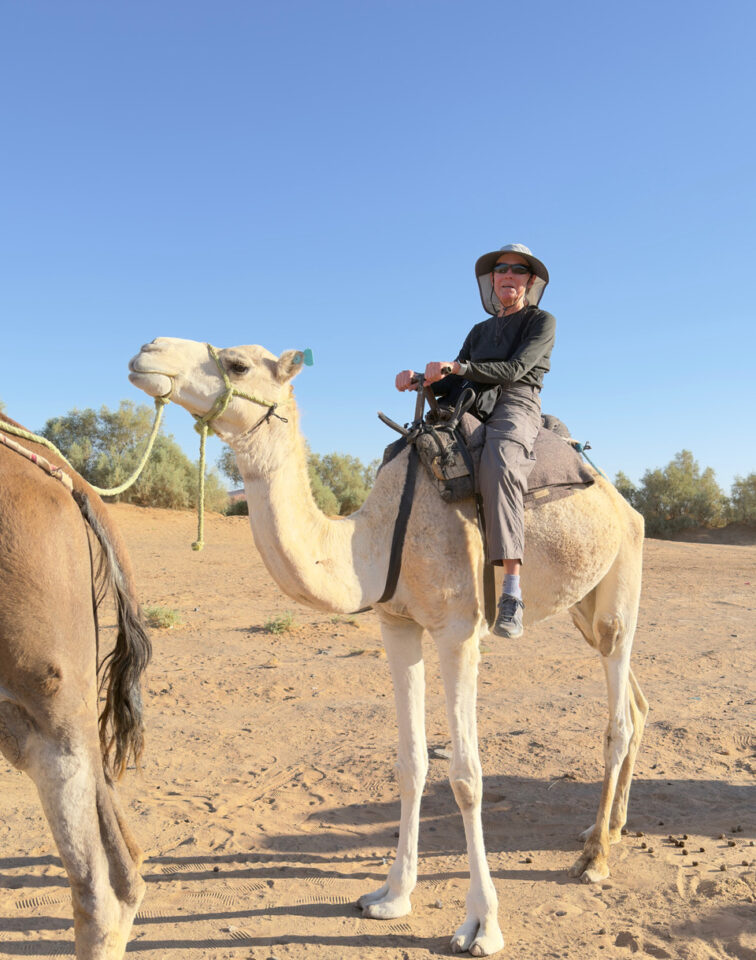
After riding a camel in Egypt three years ago, I said never again. Then I found myself astride a camel during a recent trip to Morocco. To my surprise, it proved a much better experience.
The Morocco camels were smaller and nicer (at least they didn’t spit). I sat on an oval-doughnut, padded-top saddle over the camel’s one hump — a definite improvement over Egypt’s camel saddles. And our group’s ride over the Sahara desert sand was a smooth walk compared to Egypt’s rocky-sandy terrain. So maybe I will ride a camel again…
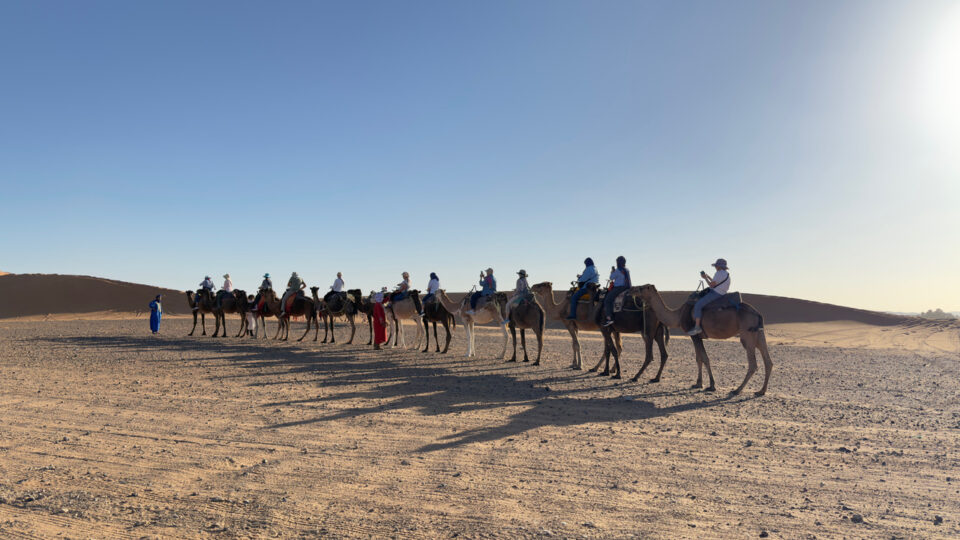
That camel ride was one cultural experience of many on my Road Scholar tour of Morocco. My small group of 28 also stayed in a Sahara camp one night and explored the fascinating medinas of Fes, Marrakesh and Chefchaouen. We gained insight into Morocco’s Sunni Muslim culture and visited the one mosque of approximately 45,000 mosques in Morocco that allows non-Muslims to enter.
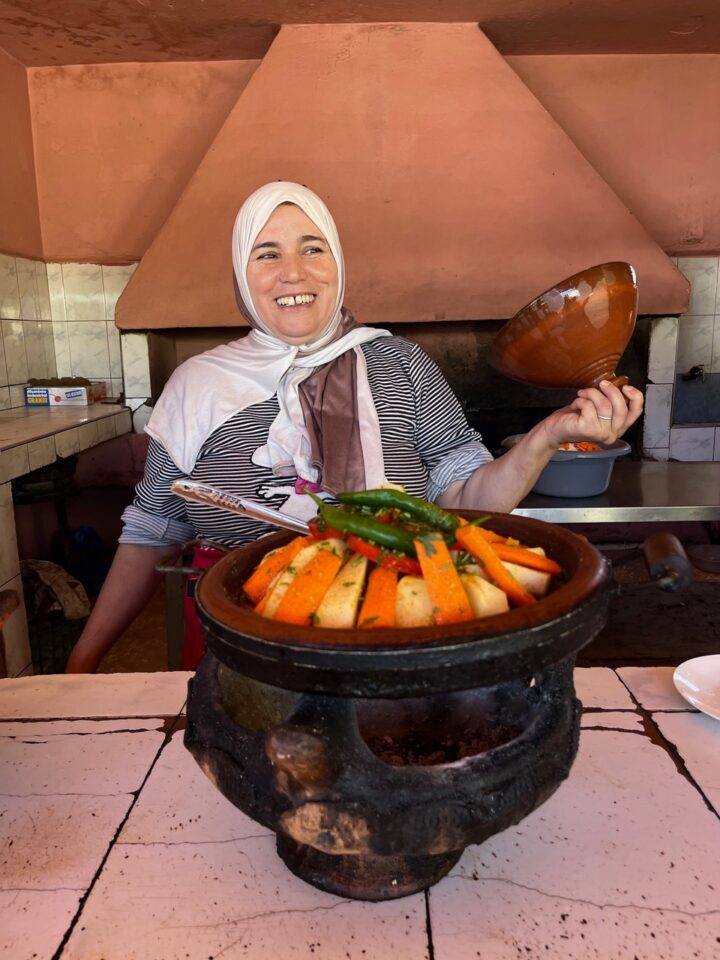
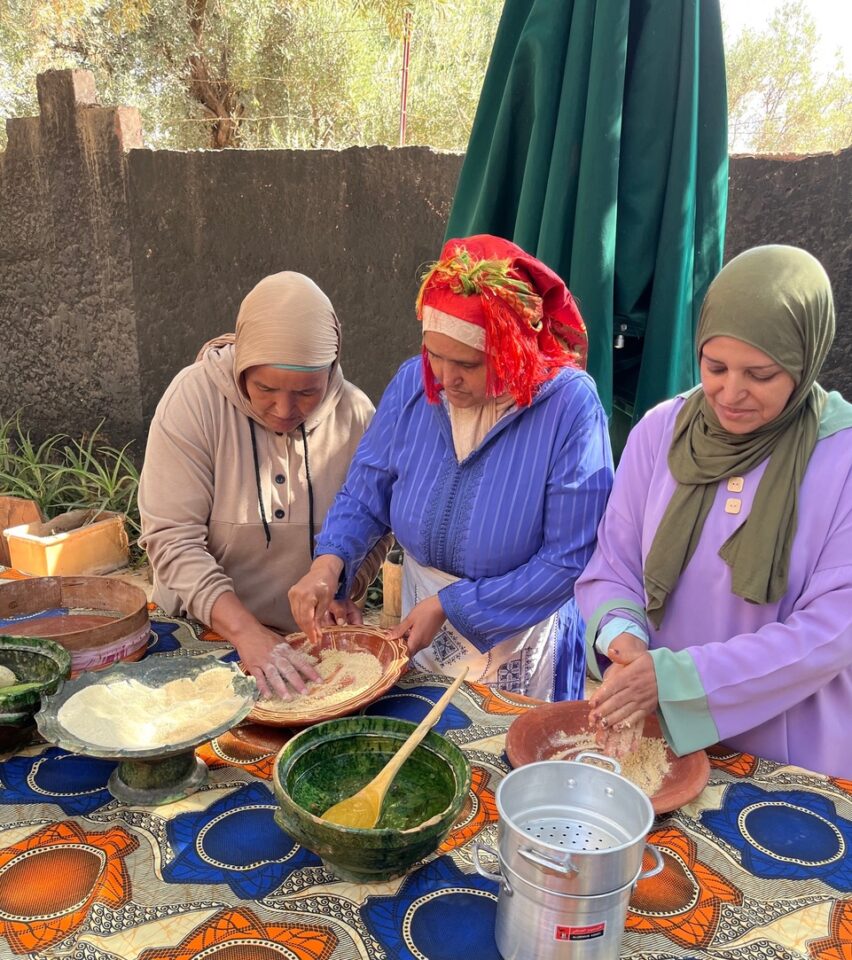
We learned about traditional tangine cooking and watched Berber women make couscous. We had the opportunity to ask them questions about their lives — and they asked us about ours in return — through our guide/interpreter. We also had excellent speakers during the tour who addressed Morocco’s Arab and Berber (Amazigh) heritage and the history behind the country’s constitutional monarchy.
Morocco is an intriguing country hugging North Africa’s western shoulder. It looks north to Spain and Portugal across the Mediterranean Sea and Atlantic Ocean. In the third-largest city of Tangier, we gazed just nine miles across the Strait of Gibraltar to see Spain.
Morocco was a protectorate (colony) of France and Spain from 1912-1956, so it also reflects European influence, especially in today’s capital of Rabat. Interesting historical note: Morocco was the first country to recognize the fledgling United States in 1777 by opening its ports to American ships, likely to ward off European threats. A formal diplomatic Treaty of Peace and Friendship was signed in 1786.
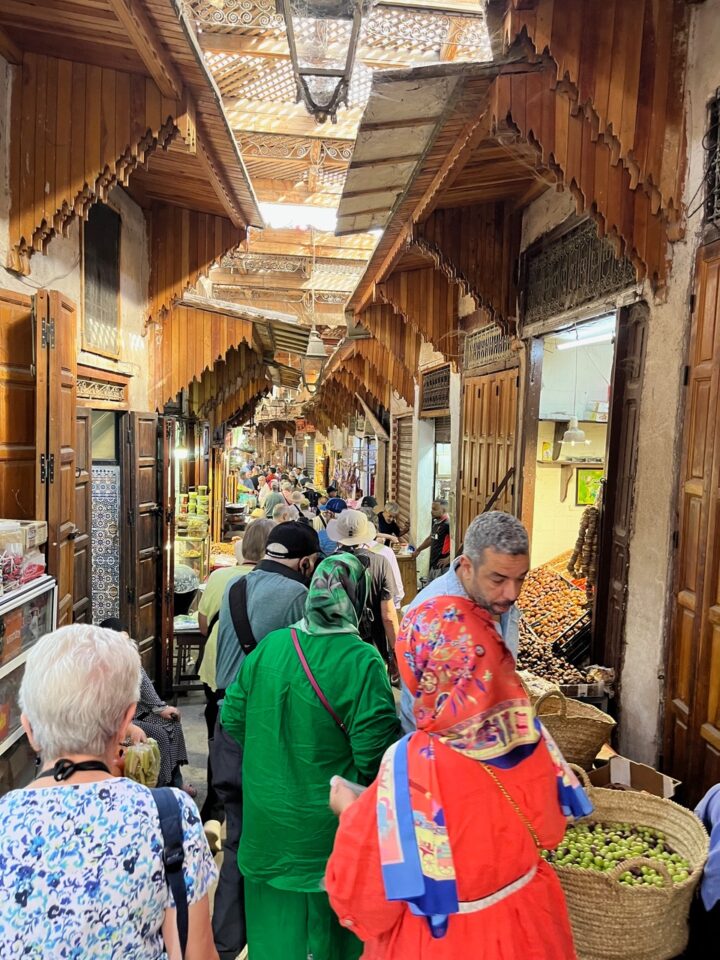
Morocco’s medinas offer the best glimpse into the country’s ancient traditions and current trades. A medina is a medieval walled town, today surrounded by a modern city. The medina contains mosques, schools, homes and souks — covered and open-air marketplaces. Here we walked through a labyrinth of streets and alleys to see an amazing array of spices, dates, vegetables, bread, meats, fish, fabrics, crafts and household goods.
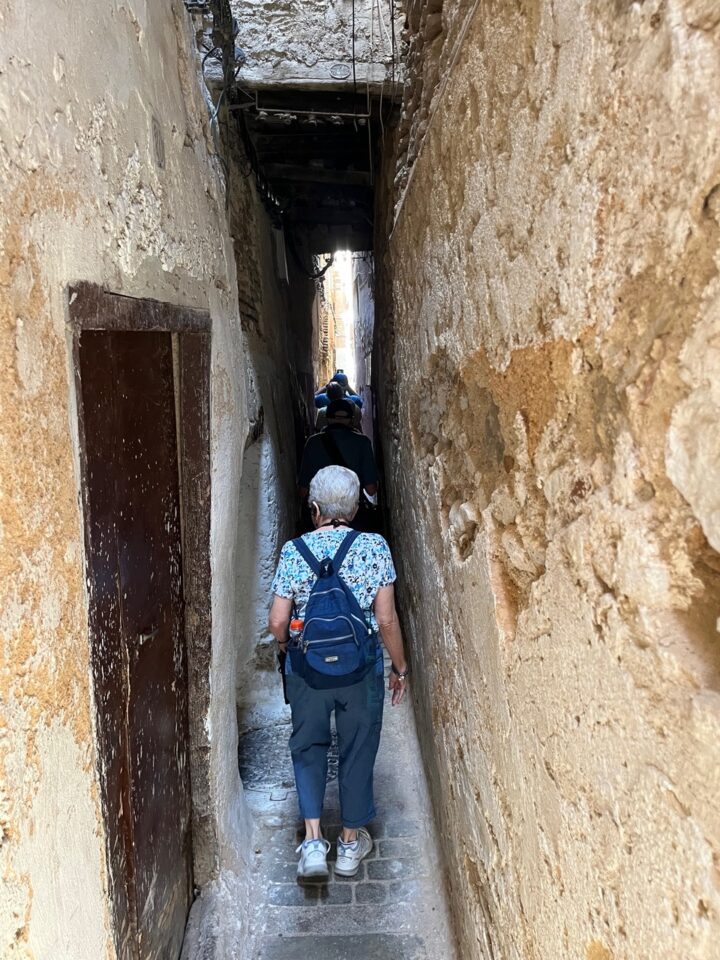
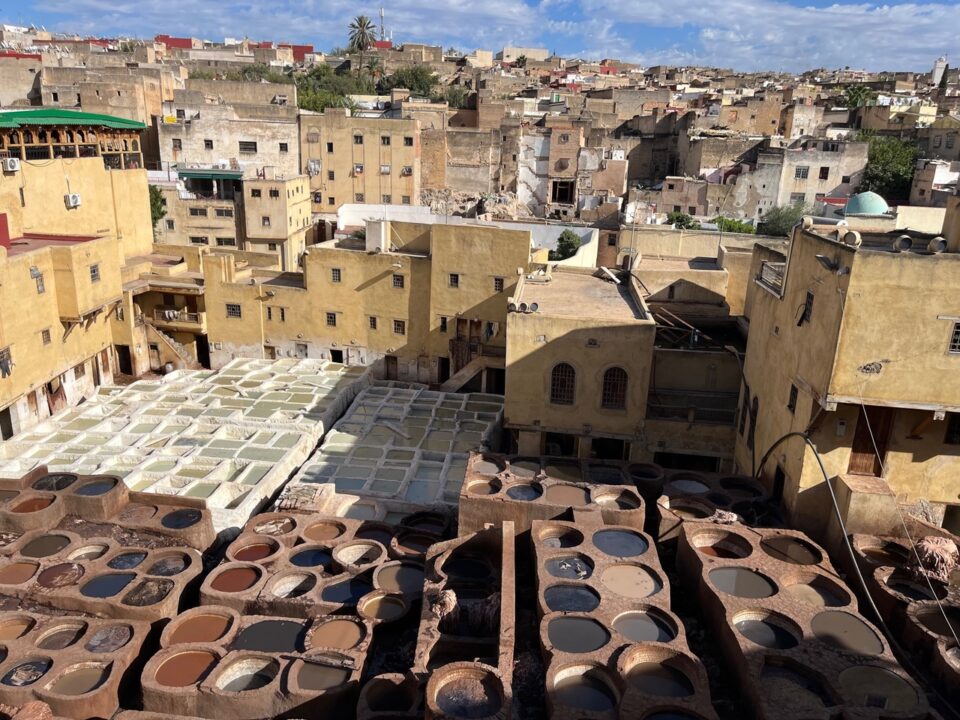
The Medina of Fes is a UNESCO World Heritage Site, dating back to the 9th century. It is one of the most extensive and best conserved medinas in the world, with about 9,600 streets and alleys – possibly the largest car-free area in the world. We walked through amazingly narrow alleyways and emerged into a kaleidoscope of colorful street markets. One distinctive Fes trade is leather processing and dyeing. We got a birds-eye view of the tanneries’ dyeing vats and then browsed for beautiful leather apparel.
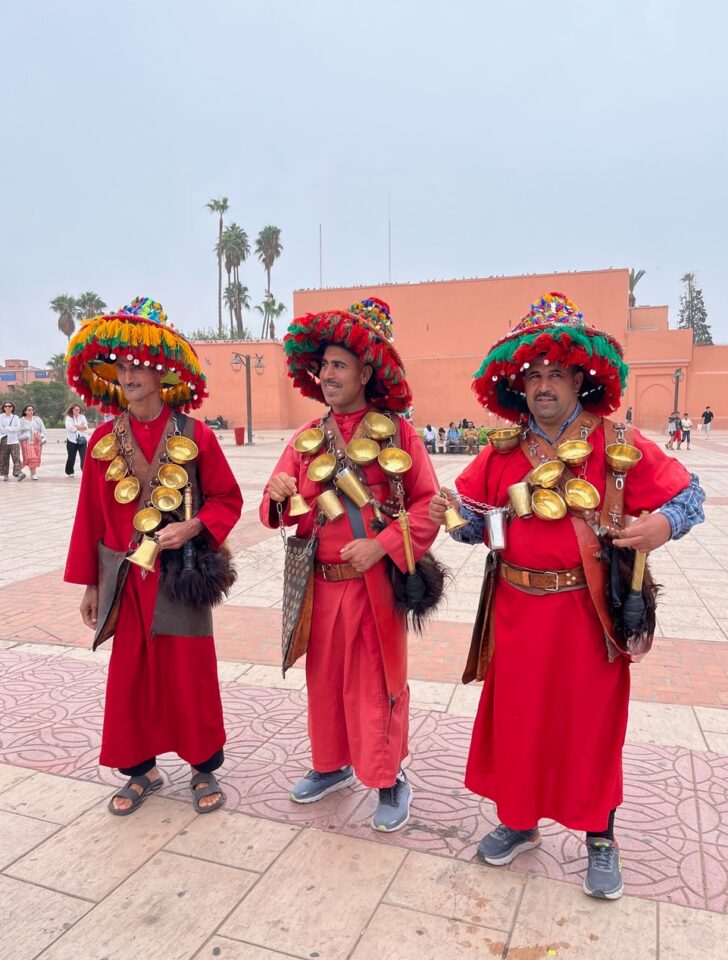
Marrakesh’s medina is also a UNESCO World Heritage Site, centered around the huge Jemaa el-Fna square. At one side is the landmark minaret of the 12th-century Koutoubia Mosque. The square bustles with souks selling traditional textiles, pottery, crafts and jewelry. Colorfully dressed garrabs (water men) sell cups of water from their goat-skin bags. But the legendary snake charmers are the highlight, performing with cobras and other snakes for a fee.
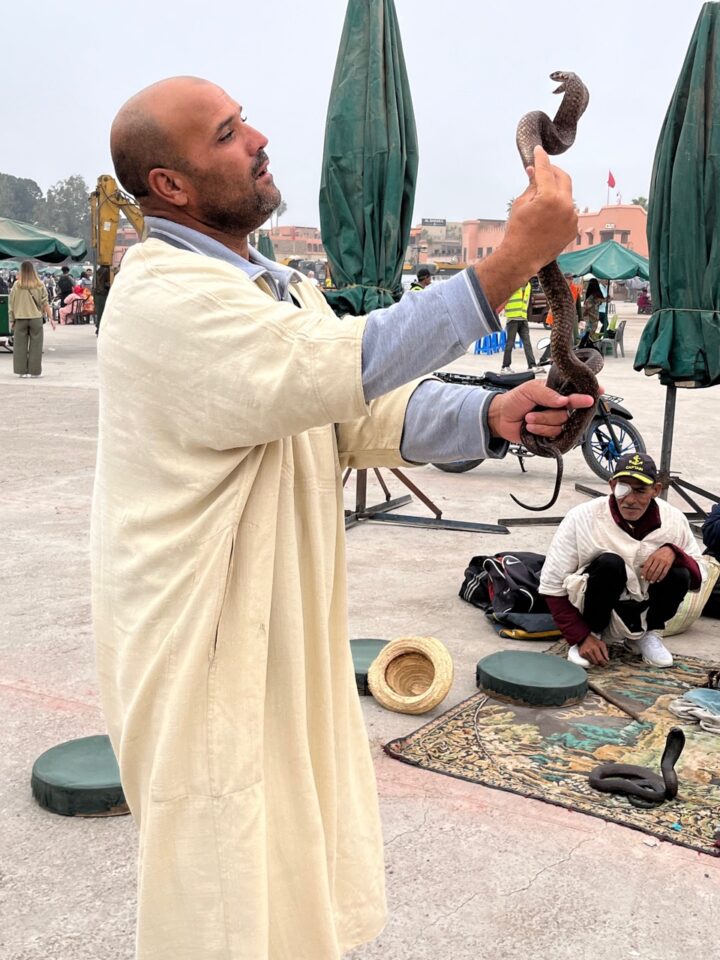
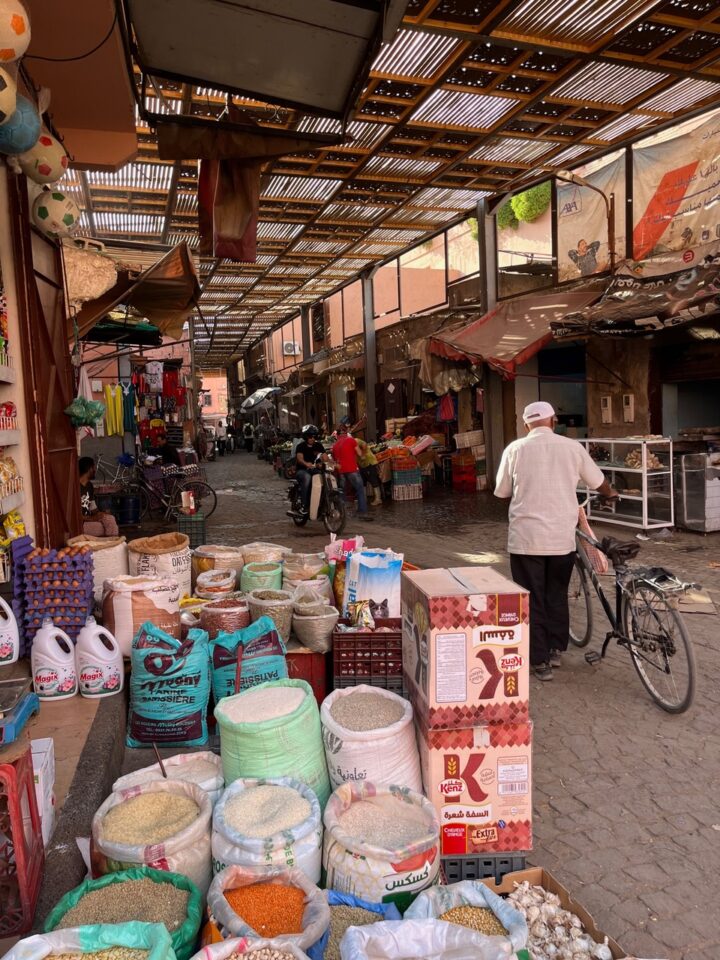
Both Marrakesh and Fes were once capitals of Moroccan dynasties and today are major cities. Chefchaouen in the Rif Mountains is a small hillside town with a quieter medina ascending steep cobbled lanes. Known as the “Blue City” for its blue-washed buildings, Chefchaouen also offers good hiking in the surrounding hills.
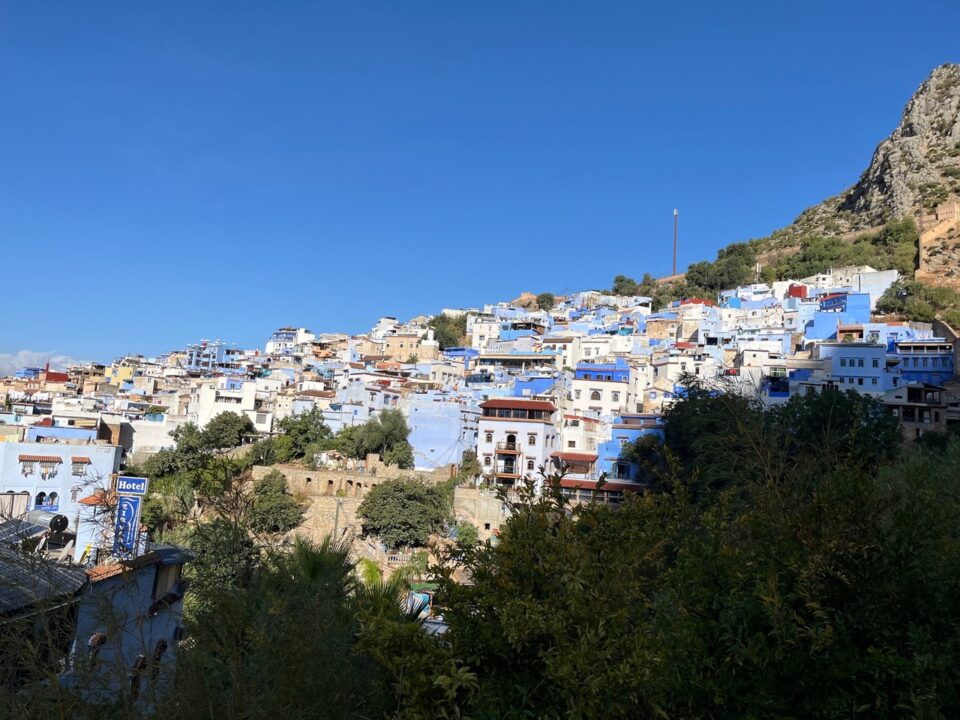
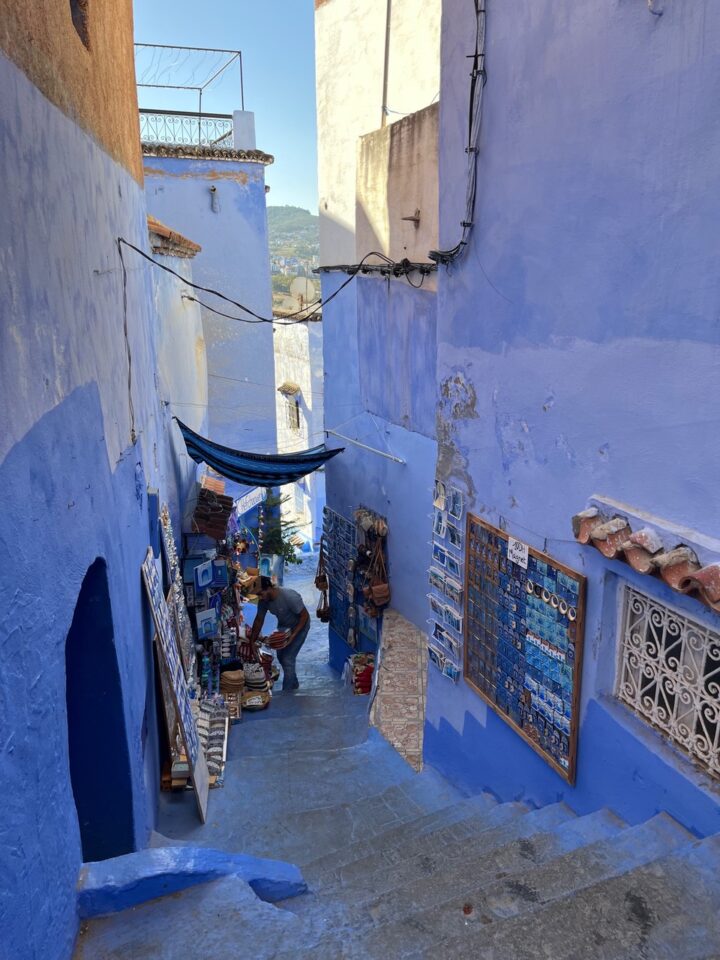
Beyond medinas, my tour visited historic sites such as the Mausoleum of King Mohammed V and adjacent 12th-century Hassan Tower, the symbol of Rabat. In Marrakesh we toured the 19th-century Bahia Palace, decorated with stunning stucco carvings and mosaic tiles. It was built by sultan’s grand vizir for his four wives and 24 concubines.
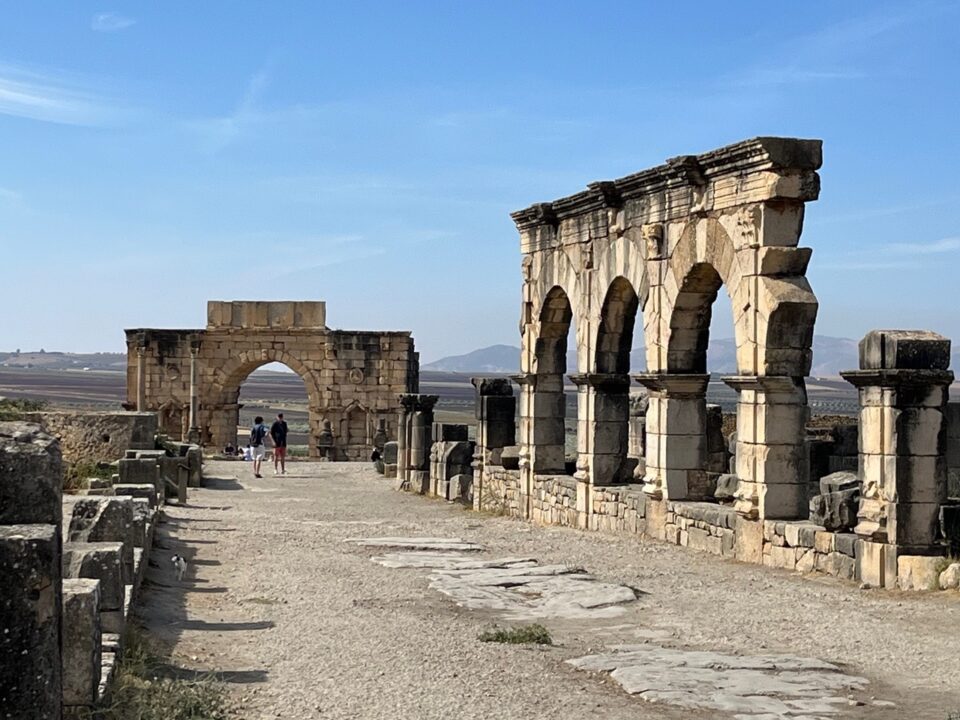
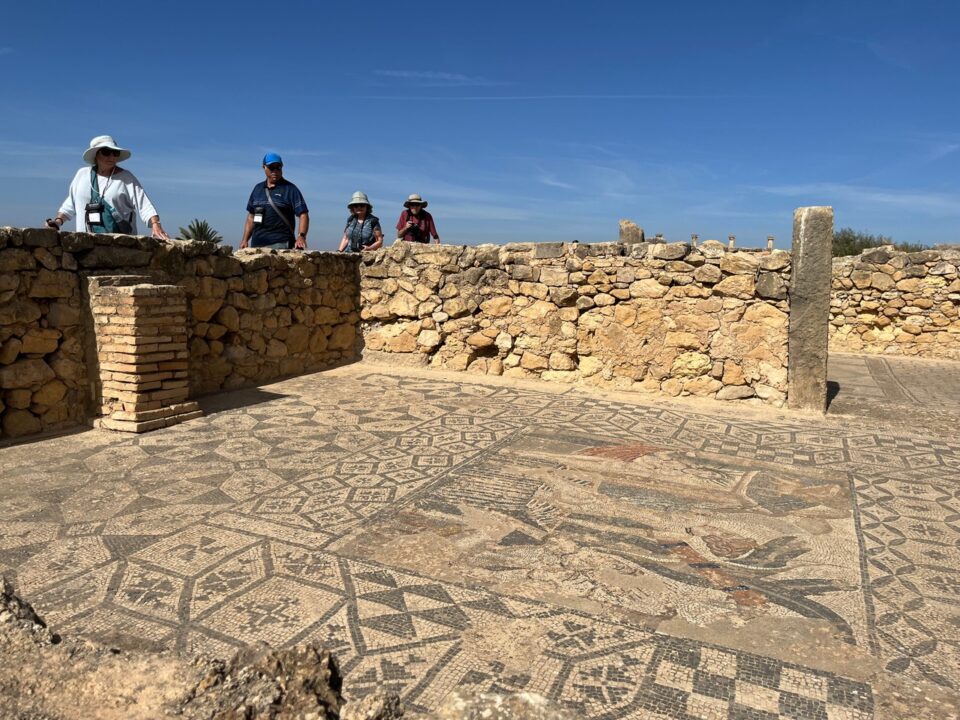
Near Fes, we explored the ruins of Volubilis, once a large Roman city between 40 and 285 AD. Now a UNESCO World Heritage Site, Volubilis has exceptionally well-preserved mosaic floors in house foundations, plus a basilica, temple and triumphal arch.
A cultural highlight was the Pierre Bergé Museum of Berber Arts inside the Jardin Majorelle in Marrakesh. It showcases more than 600 traditional Berber artifacts, textiles and jewelry collected by Pierre Bergé and Yves Saint Laurent, who lived there. This complemented what we learned on the tour: that 27-35% of Morocco’s population is officially Berber, out of more than 38 million people total. However, they call themselves Amazigh rather than the European term, Berber.
Amazingly, the Amazigh had no written language until one was created in 2004. In 2011 Amazigh became an official language of Morocco, along with Arabic. There are three dialects of Amazigh and more than 100 Amazigh tribes in Morocco.
Two other special experiences on this tour included a guided walk through the Hassi Labied Oasis and driving over the High Atlas Mountains. The summit at Col du Tichka is 7,415 feet, with sweeping views.
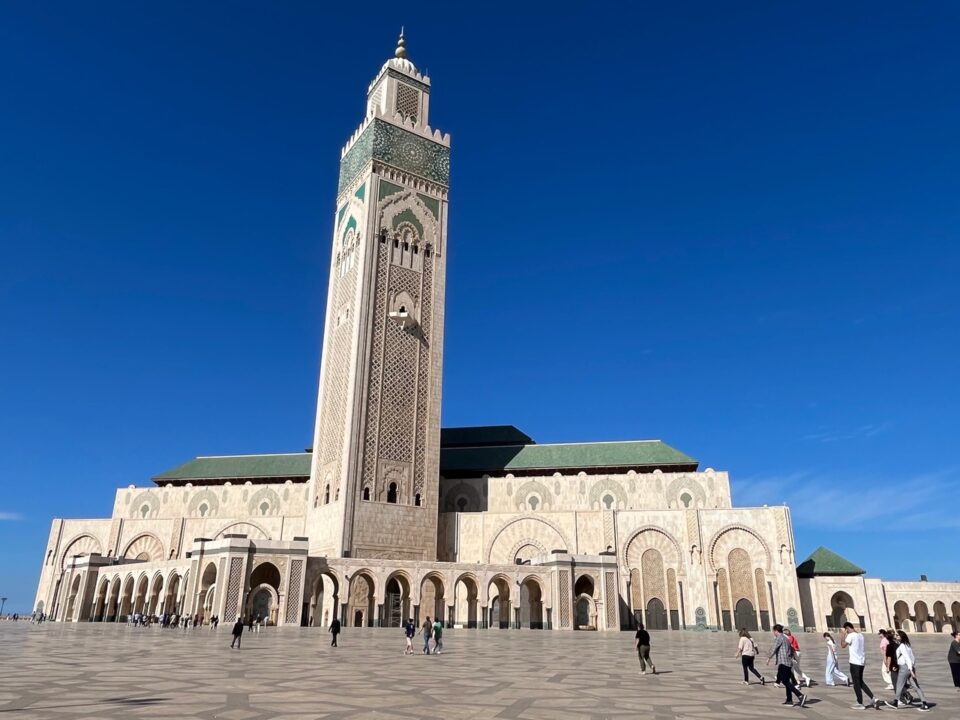
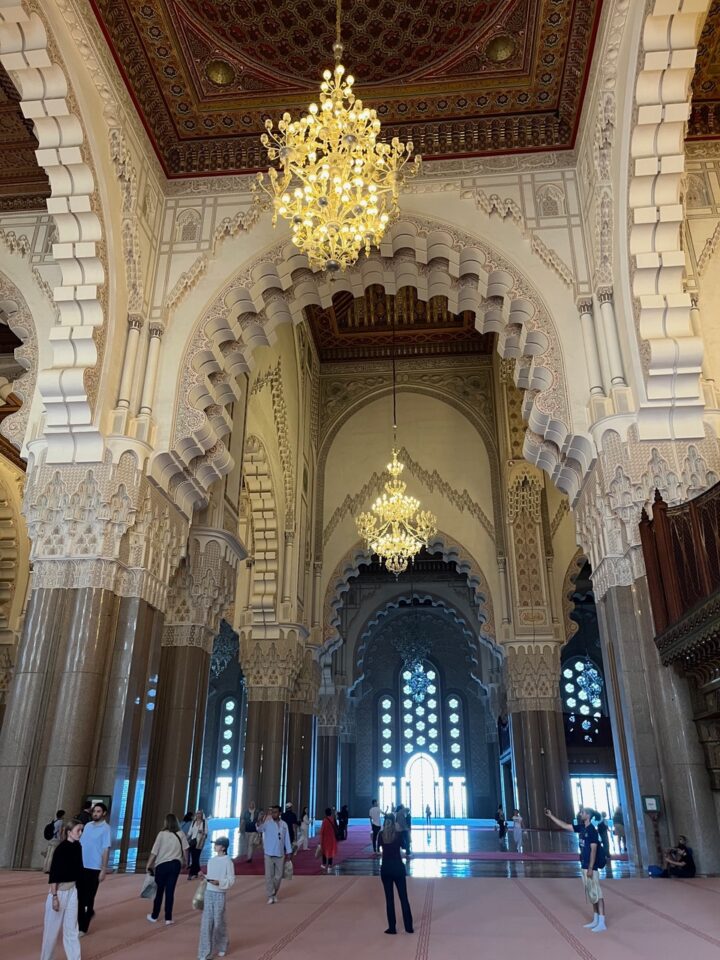
Concluding our tour in Casa Blanca, we visited the Hassan II Mosque – built in 1993 specifically as a mosque that non-Muslims can enter to better understand Islamic worship. It is the second-largest mosque in Africa and 14th largest in the world. Built on Casa Blanca’s seawall overlooking the ocean, the mosque can accommodate 25,000 worshipers inside and 80,000 outside on its huge plaza during religious holidays.
— By Julie Gangler
 Julie Gangler visited Morocco on the Road Scholar tour, Morocco: Melting Pot of Cultures. She is a freelance writer who has worked as a media relations consultant for the Snohomish County Tourism Bureau. She began her career as a staff writer at Sunset Magazine and later was the Alaska/Northwest correspondent for Travel Agent Magazine.


Real first and last names — as well as city of residence — are required for all commenters.
This is so we can verify your identity before approving your comment.
By commenting here you agree to abide by our Code of Conduct. Please read our code at the bottom of this page before commenting.