
Will you chip in to support our nonprofit newsroom with a donation today?
Yes, I want to support My MLTnews!The future of local journalism is bleak unless communities across America decide it is worth saving. When independent journalism dies, accountability and democracy in your community isn’t that far behind.
That was the stark takeaway from the deeply researched and reported 2023 documentary Stripped for Parts shown Saturday at the Edmonds Theater courtesy of the League of Women Voters of Snohomish County and My Neighborhood News Network (MNNN).
More than 100 people attended the showing and stayed for the panel discussion led by MNNN Founder and CEO Teresa Wippel.
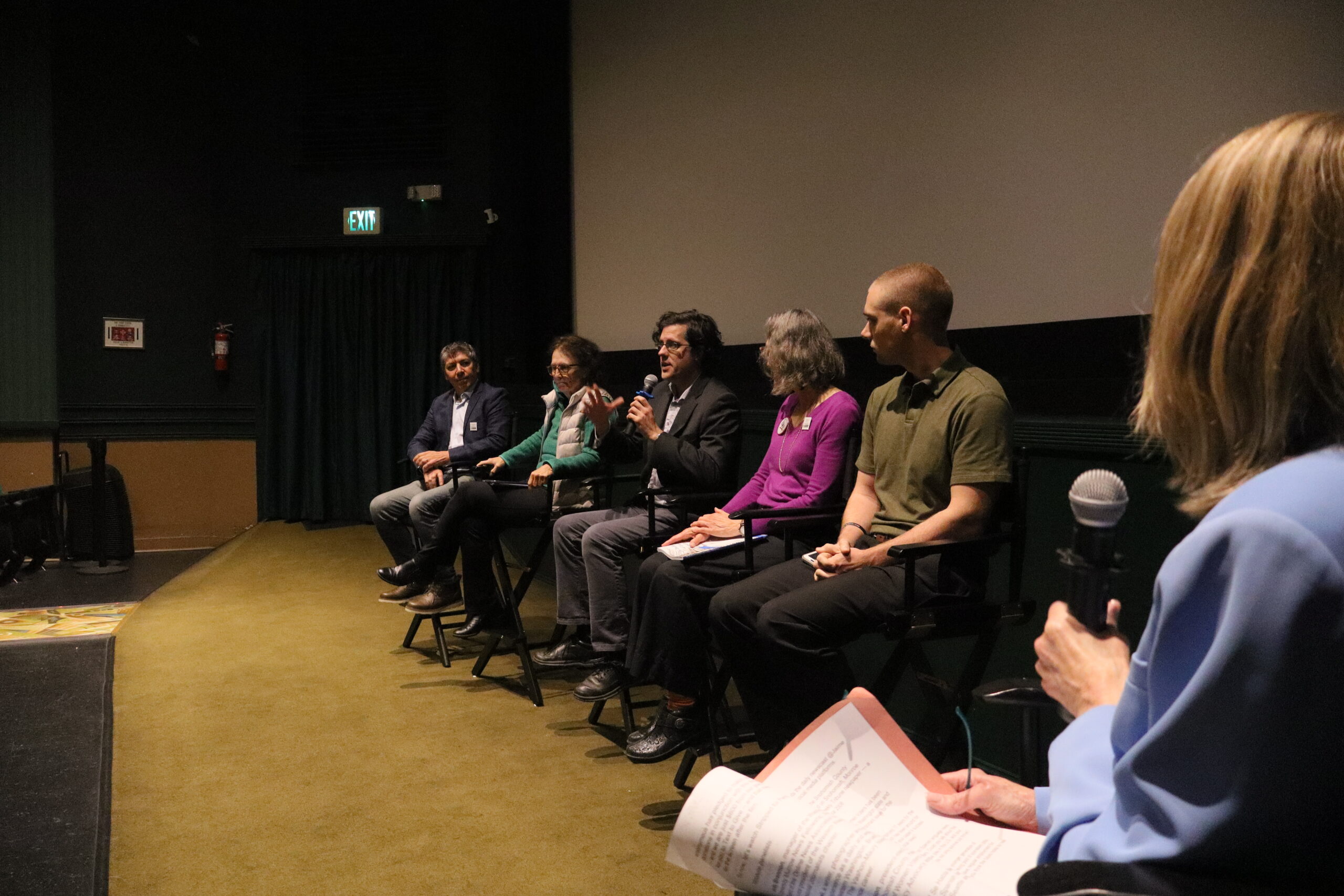
Stripped for Parts is a 90-minute fact-packed journey from filmmaker Rick Goldsmith that directly links disappearing local newspapers to secretive hedge funds like Alden Global Capital (referred to as “vulture capitalists” in the film). They buy struggling local newspapers, drastically reduce or eliminate staff then sell off the highly coveted assets — usually marquis buildings and premier downtown land — for millions of dollars. They leave a shell of the news organization, if anything at all.
These buyers aren’t trying to change the editorial narrative; they take advantage of “broken capitalism” to make money in real estate, the documentary notes. Other owners turn new acquisitions into “ghost papers” with no employees.
The result — a news desert, a community with no local newspaper and no access to reliable, neutral coverage of government and the community. More than 2,000 U.S. community newspapers folded in the last five years, a fact the League of Women Voters found so distressing, it is now a national League priority.
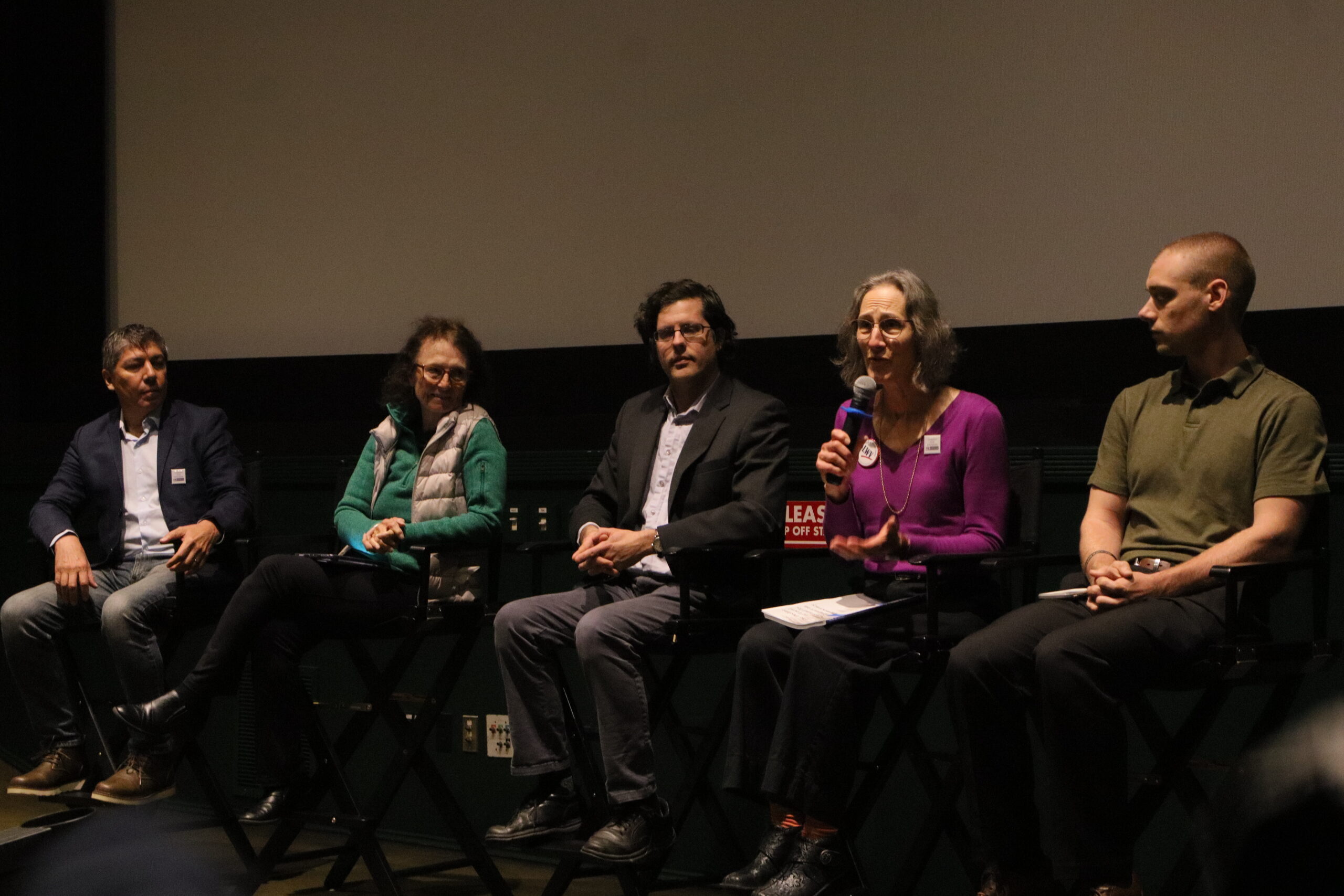
“When local news is diminished, voting rates decline, the number of people running for office declines and government spending is up [because there is little to no oversight],” said panelist Brenda Mann Harrison, president-elect, League of Women Voters (LOWV) of Snohomish County and member of the Local News and Democracy Advocacy and Education Committee.
“Local news is essential for democracy and informed voters,” she added. “The [function of] LOWV is to empower voters and defend democracy and you can’t do that if you don’t have trusted news and information that your local trained reporters can provide.”
Panelist Michael Whitney, longtime editor of the Snohomish County Tribune, a weekly printed paper owned by Pacific Publishing Company, echoed the theme of trusted news and local, trained reporters.
“Our role is to clarify and provide neutral informative reporting,” Whitney said. “Without that, it would just be Facebook comments.” Fact-checking social media compels government transparency, he added.
The Tribune has been around for 126 years, covering the cities of Everett, Snohomish and Monroe. Whitney said Sultan and Lake Stevens may be their next news destination.
In Stripped for Parts, reporters fact-check their own publishers as well, putting their own livelihoods on the line.
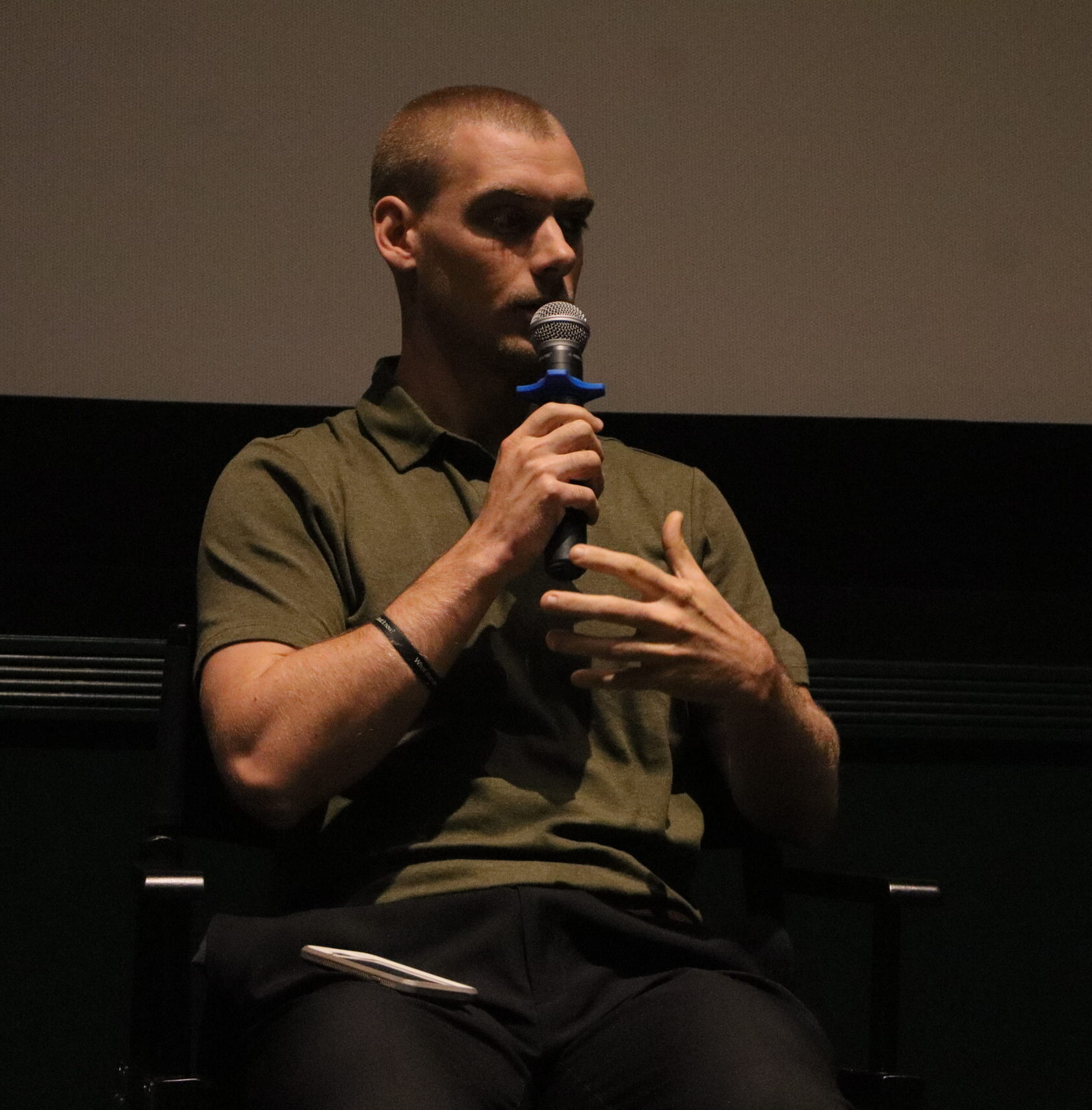
Panelist Alex Alex Bruell, a writer, photographer and editor with a decade of experience as a daily and weekly newspaper journalist in Western Washington, shared details on a familiar local story.
“When Carpenter Media Group cut the Everett Herald staff in half [in June 2024], reporters wrote a story about it. Carpenter Media took it down and the reporting staff had to negotiate getting it back up,” Bruell said. “That’s not independence.”
After the screening, during audience Q&A, one audience member described what some others in the room were feeling: “I had no idea. What can we do?”
The fact that you can read this is an example of a growing business model. My Neighborhood News Network is a nonprofit news organization that covers Edmonds, Woodway, Lynnwood, Mountlake Terrace and Brier. It depends on grants, donations and advertising and is guided by a local volunteer board. (You can donate to My Neighborhood News Network at this link.)
Additionally, MNNN is part of a unique news partnership with Washington State University to get a full-time, state-funded reporter.
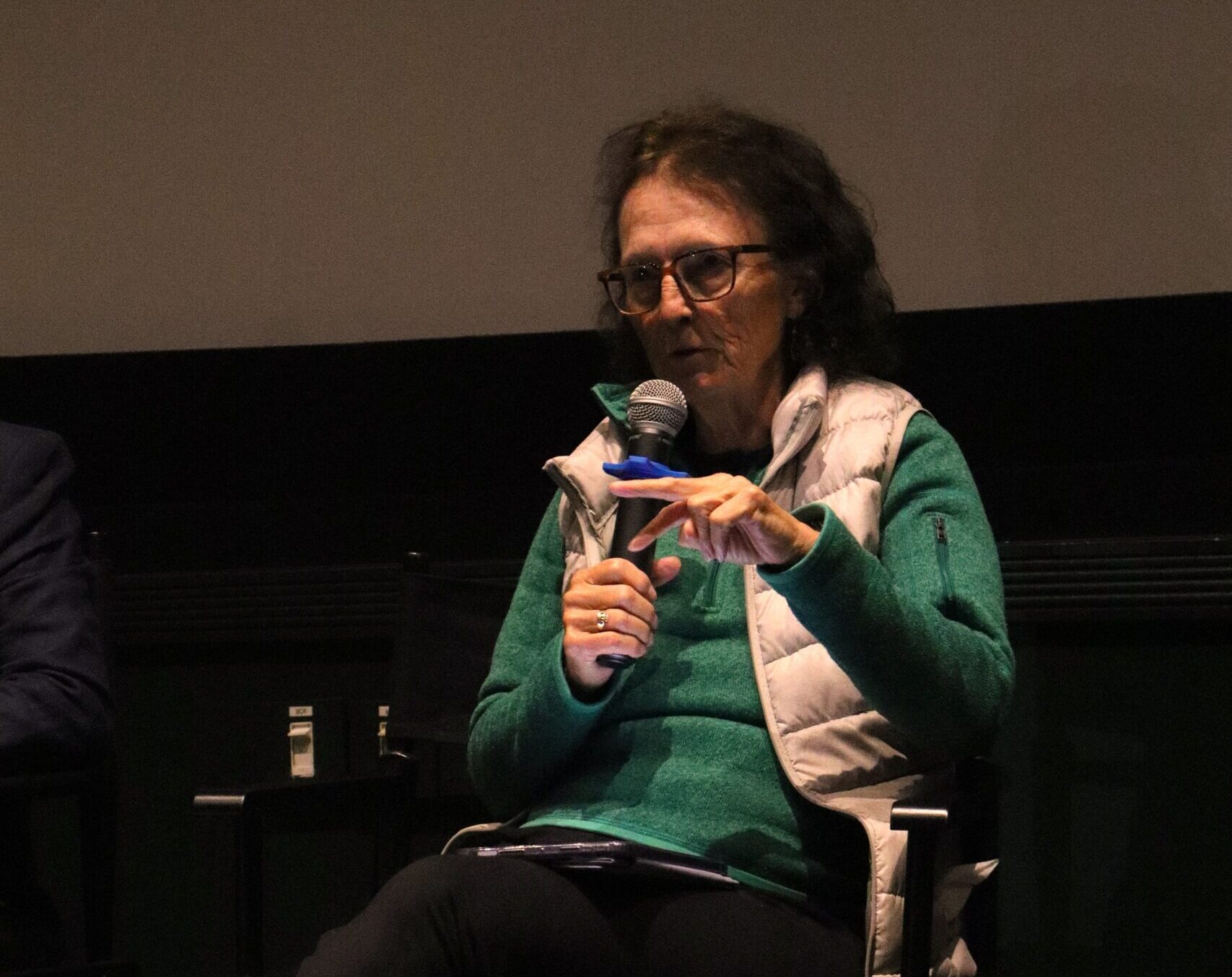
Panelist Jody Brannon, manager of the WSU Murrow News Fellowship, placed 16 journalists who serve 22 news organizations statewide for a two-year, paid appointment (with benefits) in 2024.
MNNN housing reporter Angelica Relente is one of those fellows. Her work — like that produced by other fellows — is shared through Creative Commons, which means that all news outlets can use stories for free, with attribution. Relente’s reporting has included stories on state, county and city housing requirements and profiles of nonprofit organizations that provide services to those facing homelessness.
“This is state-funded journalism,” Brannon said of the fellowship program aimed at helping keep news organizations running. Only Washington and California do this now and with the Washington state budget crunch, the program may be in jeopardy — but not for lack of interest. “If we opened it up today, we’d have hundreds of students applying,” she said.
Harrison said the League of Women Voters will continue to advocate for state legislation — introduced during the 2025 legislative session as Senate Bill 5400 — to help fund local journalism. SB 5400 called for taxing social media platforms that scrape local news sites for content. The bill died in the Senate Ways and Means Committee but supporters are talking about introducing similar legislation during in 2026.
Don’t forget non-English speakers
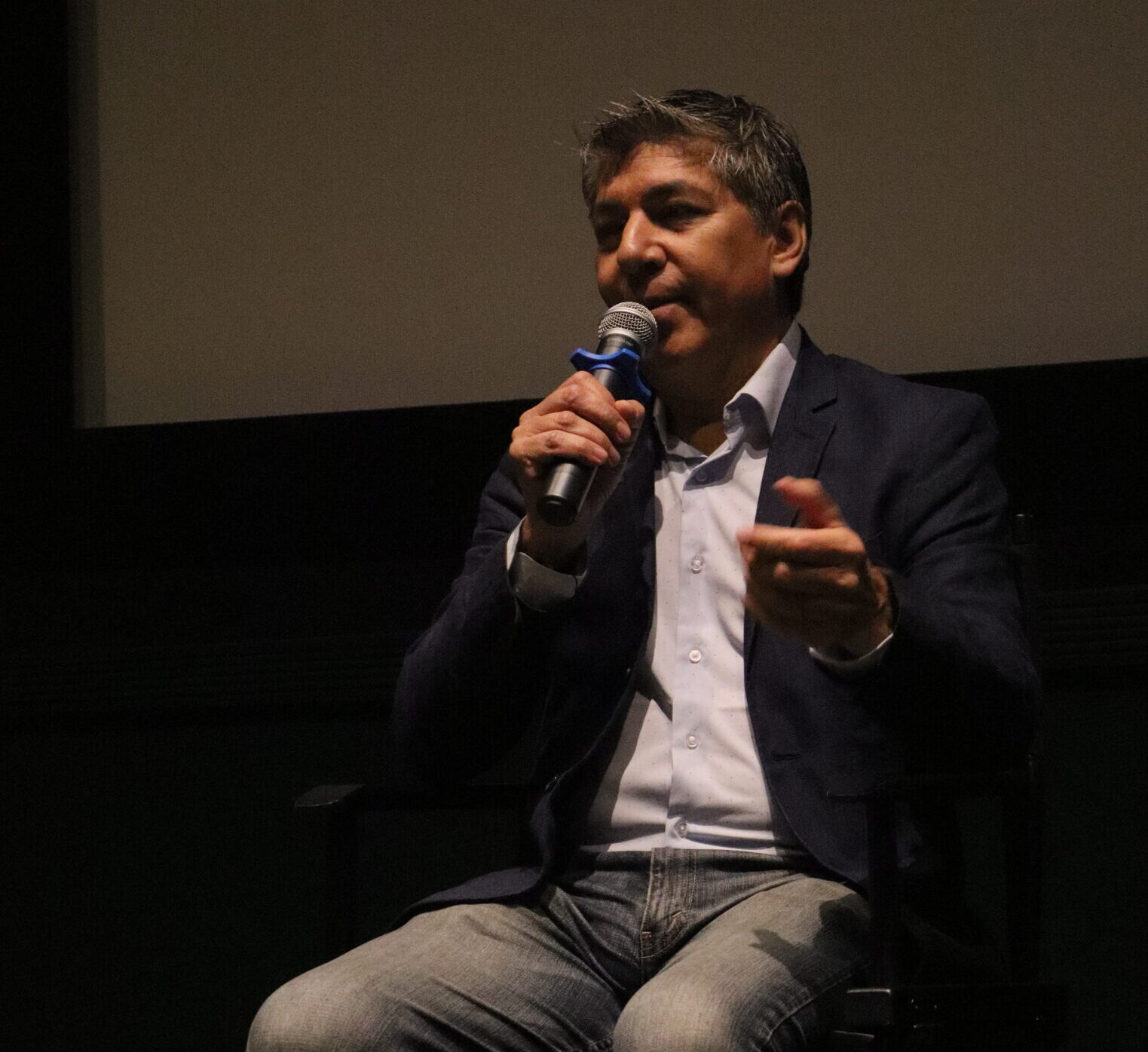
Panelist Jaime Mendez and his wife Diana Oliveros produce local news in Spanish from a studio in their Lynnwood home. Se Habla Media has nearly 200,000 followers and does a daily online newscast and weekly podcast.
“Eighty-seven percent of Spanish speakers get their news digitally. They prefer information in their language,” Mendez said, adding that Se Habla’s work is supported by advertisers who target Spanish speakers.
Learn more about local news deserts
Northwestern University recently wrapped up an in-depth visual research project on news deserts, made simple with maps. That shows 213 counties in the U.S. are without a local news outlet.
The Stripped for Parts documentary is free to watch via this PBS link here.
You can watch the video of the panel discussion here:

Real first and last names — as well as city of residence — are required for all commenters.
This is so we can verify your identity before approving your comment.
By commenting here you agree to abide by our Code of Conduct. Please read our code at the bottom of this page before commenting.